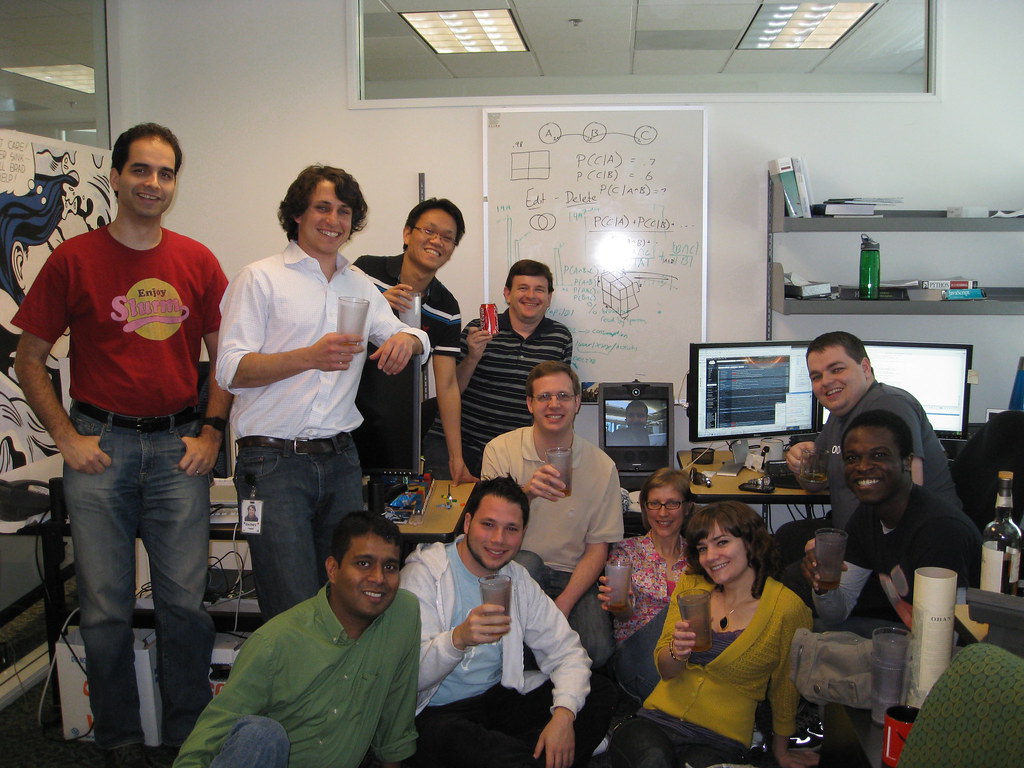
What the Google Reader obituaries miss—and they’re many, beloved as it was by the commentariat—is that Google Reader was living on borrowed time from day one.
It started life as a feed previewer, to ensure the Blogger team’s Atom feed parser was working. Only, this internal tool was strangely useful as a way to get caught up on the headlines from your favorite sites. “I think I built a thing,” Googler Chris Wetherell recalls telling a colleague. And in the freewheeling early days at the search giant, where anyone could work on a 20% Time Project, that feed previewer slowly morphed into a feed reader app codenamed Fusion.
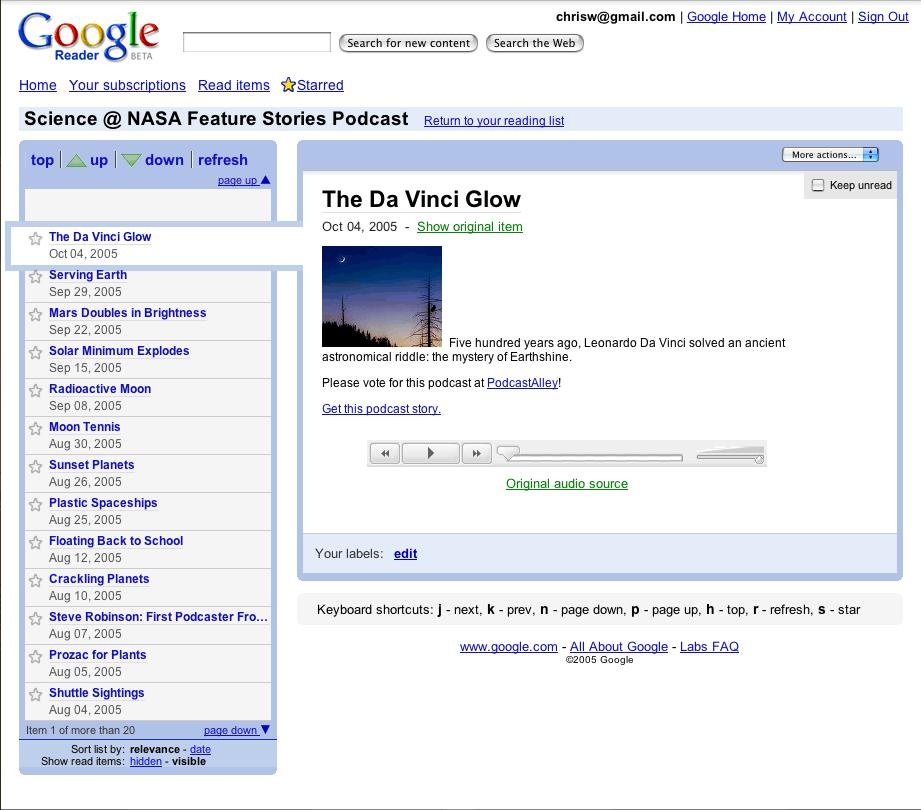
But others had already laid claim to the Fusion name. Names like Transmogrifier and Reactor were batted around, before the team settled on the Googly simplicity of Reader, and a quiet launch on Google Labs.
And “it immediately crashed spectacularly. The site simply couldn’t keep up with the traffic on the first day.” Or for many days thereafter, as “hundreds of thousands” joined Reader in the first couple weeks after it launched. “Everyone from Google used Reader, from Larry and Sergey to the newest engineers,” recalled Google user experience designer Jenna Bilotta. “It’s such a beloved project.”
Yet the name Reader belied the larger ambition behind the project. “How do you stop from being distracted by, well, the whole internet? It’s an endless divertimento,” pondered Wetherell aloud two weeks after Google Reader’s launch. The real goal was turning the internet into a never-ending TV.
Everything, all at once
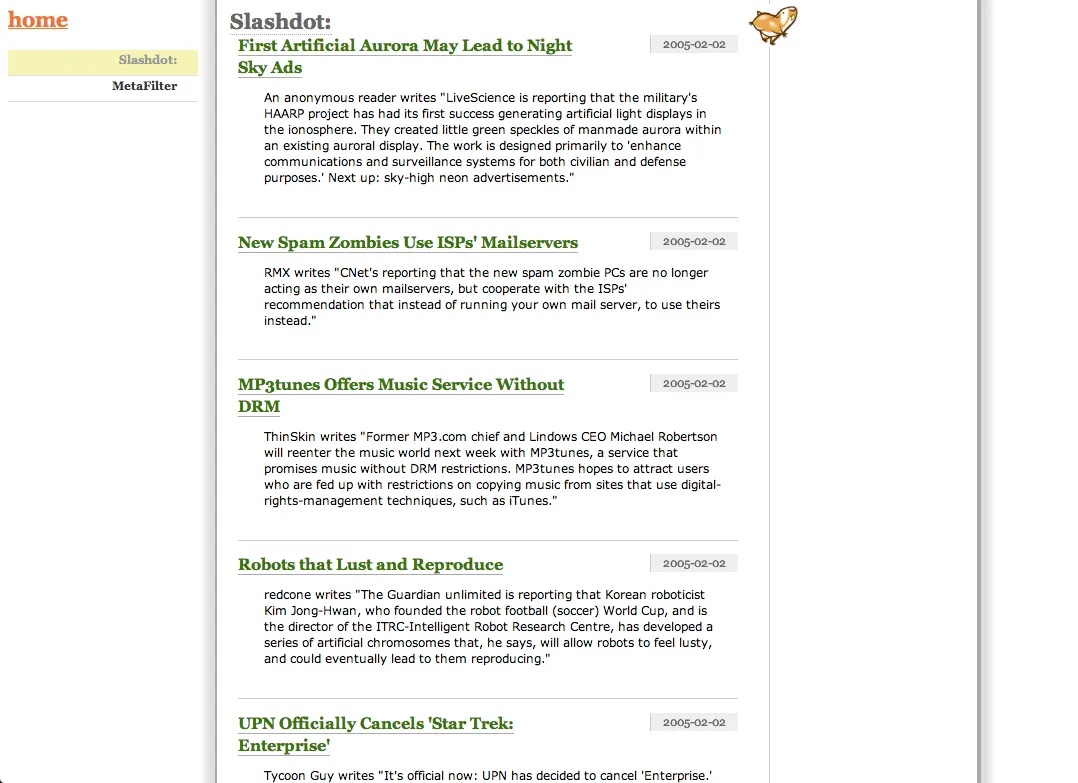
Internally at Google, feeds weren’t what made Wetherell’s code exciting. Instead there was an idea, bubbling under the surface, as people published blog posts on Blogger, shared photos on Picasa, and uploaded clips to Google Video.
“The questions we began to hear from users changed from ‘How and what do I blog?’ to ‘Where do I find the good ones?’ and ‘How do I keep up with all of these great blogs?’,” recalled Google Reader product manager Jason Shellen years later. So when this “feed parser that had mutated into an unholy ur-product,” as Wetherell called it, showed up at Google, it seemed to promise an answer.
Google’s mission was stated as organizing the world’s information. And maybe, search wasn’t the only way to organize things. Maybe Reader promised a way that content could be “fused together perhaps in a new TV-like format.”
Or, as Wetherell more philosophically put it, during his pitch meeting for turning his code into a product: “Feed reading is inherently polymorphic.” Of more than one form.
Feeds could be whatever you wanted them to be. Parse them into a simple reader, and you have a personal newspaper of your favorite sites’ headlines. Parse them up in another way, though, and you could have a slideshow, a flipboard, a list of today’s most important things distilled from the firehose. And then, maybe, you’d have respite from the internet’s endless divertimento, and a way to find the good stuff among the chaff. A social network, as we’d come to call them.
First they’d get the feed reader out the door, then they’d solve discovery.
The accidental social network
Only, it turned out, Google Reader was the social network people wanted all along.
Reader as a feed reader was basic, even for its time. “Beautiful, needs work,” was TechCrunch founder Michael Arrington’s first take on Google Reader. It had no unsubscribe button, among other missing features.
But the team moved fast and managed to not break things, and bit by bit turned Reader into the most popular feed reader. Partly due to Google’s largesse. It had a free API, for one, so as smartphones took off most early RSS reader apps used Google Reader to fetch feeds. It had nearly limitless archives, ones maintained today on the actual Internet Archive; even if a blog went offline you could read its back catalog on Google Reader. And it was fast: The “Google Crawler that gave the system ability to make lightning-fast connections and bring up recommendations,” Wetherell would later tell Om Malik, was one of the main reasons Google couldn’t simply spin out Google Reader. “It helped the average users.”

But those recommendations—and the users behind them—were what set Google Reader apart from other RSS readers. It had, at launch, an option to sort feeds by relevance, an early attempt at a personalized feed (one that Arrington noted didn’t work, at launch at least). But more tantalizing, you could follow other people in Google Reader, and see what they were reading. You could share anything, either from the RSS feeds you followed or from the wider web, with your followers in Google Reader. No commentary, no need to think up a pithy title or expand on the takeaways. Just links, as almost a proto-link blog or newsletter, with no connection between the articles other than being a few of your favorite things.
Curators became community leaders, people you’d follow for everything about a topic, and if you squint, the tamed internet and TV channels metaphor were both alive in those tiny social parts of Google Reader. “The communities that spring up around things like GReader [were] like lightning in a bottle,” @asoneth recalled. “It was a social network for people who don’t want to talk about themselves,” as @vanderZwan put it.
When you go looking for what people remember the most about Google Reader, years later, it’s not the feed reading features and lightning-fast sync that come to mind. Those could quickly be replicated; the RSS feeds synced in Google Reader were portable optionality. When Google shuttered Reader in 2013, its refugees quickly took their feeds elsewhere. Three million people joined Feedly over the two weeks after the announcement, while 60,000 joined NewsBlur.
Feeds lived on. But people, their discoveries and algorithmless sharing, were what made Google Reader special. So much so that, when Google in 2011 tried to replace them with sharing on the fledgling Google+ social network, people took to the streets. Literally. “Nine souls — ten if you count a toddler — demonstrated in Washington on that rainy day last fall,” wrote BuzzFeed about the Occupy Google Reader protest.
But it was all for naught.
Go where the people are
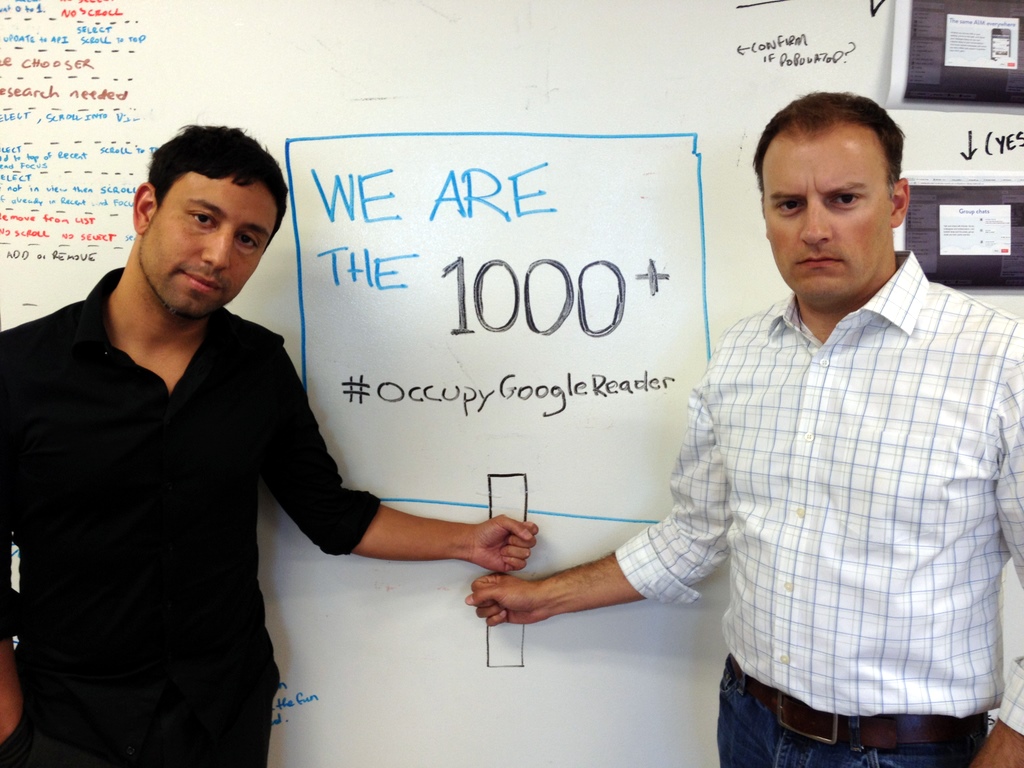
For all the love some remember Google Reader having internally, to others it always felt precarious. “Literally, it felt like the entire time I was on the project, various people were trying to kill it,” Reader engineer Dolapo Falola told The Verge.
And eventually the server bills came due.
“We need to focus—otherwise we spread ourselves too thin and lack impact,” wrote Urs Hölzle, then Google’s SVP for Technical Infrastructure, on March 13, 2013. After killing a few more forgettable Google tools, the axe came for Google Reader.
Facebook had Google’s attention. If the social network managed to wall off more of the internet, then Google would have less content to index, and search as we know it would fail. So the search giant plowed untold resources into reinventing the company around their ill-fated Google+ network, and Google Reader was, seemingly, “collateral damage from the Bay of Pigs Google Plus effort,” as @cletus put it.
After years of obsessing over how to help people discover content online, the team behind Google Reader had long since moved on to more social waters, Chris Wetherell to the Twitter team where he helped ship the Retweet feature, project manager Kevin Systrom to found a camera app called Instagram.
Users, en masse, moved their feeds to other feed reader apps. Not an iota of data was lost, as the content that filled the feeds lived on individual blogs and websites. Google+ users wouldn’t be so lucky, six years later, when that network too was shuttered, taking with it their non-portable social graphs and ephemeral posts.
“I won't miss it,” said early RSS developer Dave Winer more cantankerously—or, perhaps, more clear-eyedly—of Google Reader. “Never used the damn thing. Didn't trust the idea of a big company like Google's interests being so aligned with mine that I could trust them to get all my news.”
But that’s the thing about RSS. Winer didn’t need to love Reader for people to follow his writing there. And when it went away, those same readers could still follow him directly, could still read the words on his site that yesterday they’d read under Google’s auspices. When Google Reader went away, the only thing that truly vanished was the curation layer, Reader’s accidental social network, and that we’d have to rebuild, one link blog and newsletter at a time, on our own.
Bit by bit, that’s how the spirit, if not the code, of Google Reader has lived on.
“Now, we’ll be forced to fill the hole that Reader will leave behind,” wrote Instapaper creator Marco Arment upon the news that Reader would be shuttered. “In the long run, trust me: this is excellent news.”
In the short term, people filled the Google Reader shaped hole with social networks, which had long since taken on the early vision for a TVified web. But something snapped when Google Reader went away. It was hard to go through that and walk away with the same trust that things on the internet would stay the same. In the long run, as social media’s algorithms showed more promoted content and less of the things that people you followed created, the value of the personal connection of Google’s accidental social network became ever more clear.
It was the open protocols, the RSS feeds and email, that alone offered a direct connection to your favorite writers and publications, unmediated by algorithms. Sure, they didn’t come with built in sharing features, they were harder to discover, they required more work to turn into a community. But once you did find them, they were sticky, a connection no one other than the publishers themselves could take away. And as link blogs and roundup newsletters came en vogue, the last bit of Google Reader’s missing social graph was filled with a more personal, more direct connection that even the search giant couldn’t take away.
We never quite solved the internet’s endless divertimento. “I liked Google Reader, but all those great posts queued up with no time to read them properly felt like neglected homework,” wrote @gmantastic when Google Reader closed its doors, reminiscent of overflowing inboxes and newspapers piled up by the sofa.
Then in a burst of inspiration that became almost prophetic, they continued: “For the very rare thing that I don't want to miss, I subscribe by email.”
| Image | Credit |
|---|---|
| Header photo | The Google Reader Team, via Jenna Bilotta |
| The first prototype of Google Reader | Chris Wetherell and The Verge |
| Google Reader launch screenshot | Official Blogger Blog |
| Google Reader Protest | Chris Wetherell |
| Google Reader Sharing | Mack Collier |